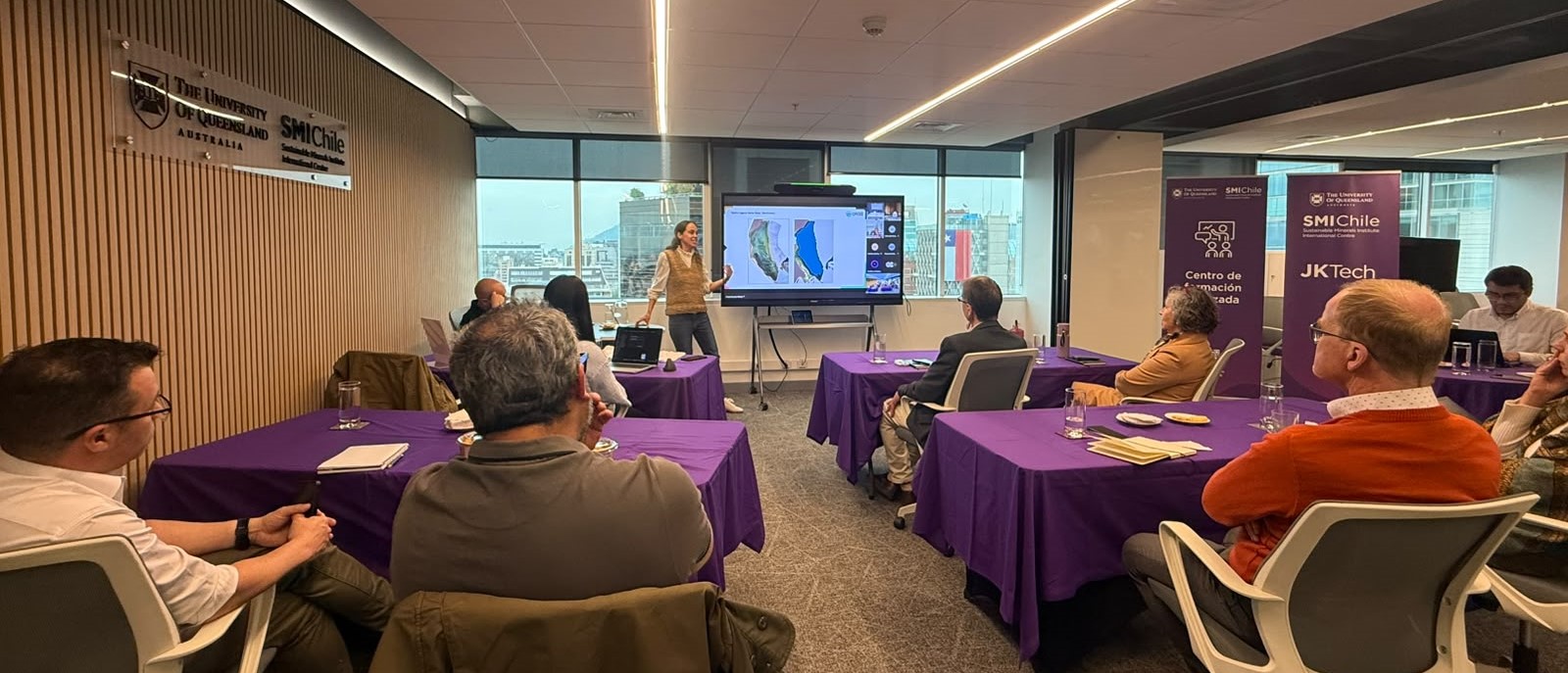
As part of the joint work between SMI Chile and the Centre for Research in Technologies for Society (C+) at UDD’s Faculty of Engineering, researchers Diego Ocampo and Javiera de la Fuente presented their respective research findings at a seminar entitled “Snow, salt flats and lagoons: geospatial artificial intelligence put to the test in the field”.
Diego Ocampo, a researcher at SMI Chile, presented “Spectral changes in snow cover in central Chile”, analysing the temporal evolution of snow cover in the Andes of central Chile using Sentinel-2, Landsat and MODIS imagery, integrated with precipitation, temperature and 0 °C isotherm elevation data.
Understanding these changes is important because the optical properties of snow determine how much heat it absorbs and influence the rate of snowmelt, seasonal water availability and the hydrological response of river basins.
“In a future marked by higher temperatures, shorter winters, variable precipitation, a rising snow line and increasing pressure on water resources, having a reproducible satellite-based system will make it possible to establish baselines, identify early changes and prioritise events for validation,” explains Diego Ocampo. “However, spectral signals should be understood as indicative evidence rather than direct proof of contamination or rainfall on snow; their attribution requires complementary meteorological, atmospheric and field observations.”
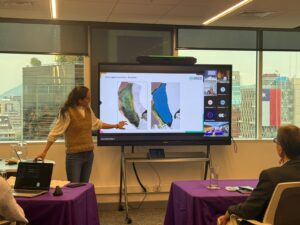
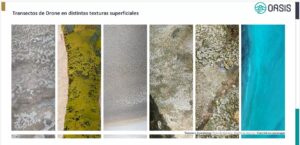

Javiera de la Fuente, a researcher at UDD’s C+ Centre, presented her work on vegetation mapping of the Maricunga Salt Flat and adjacent lagoons using artificial intelligence and satellite imagery, demonstrating the influence of water availability on vegetation growth in these high-Andean wetlands.
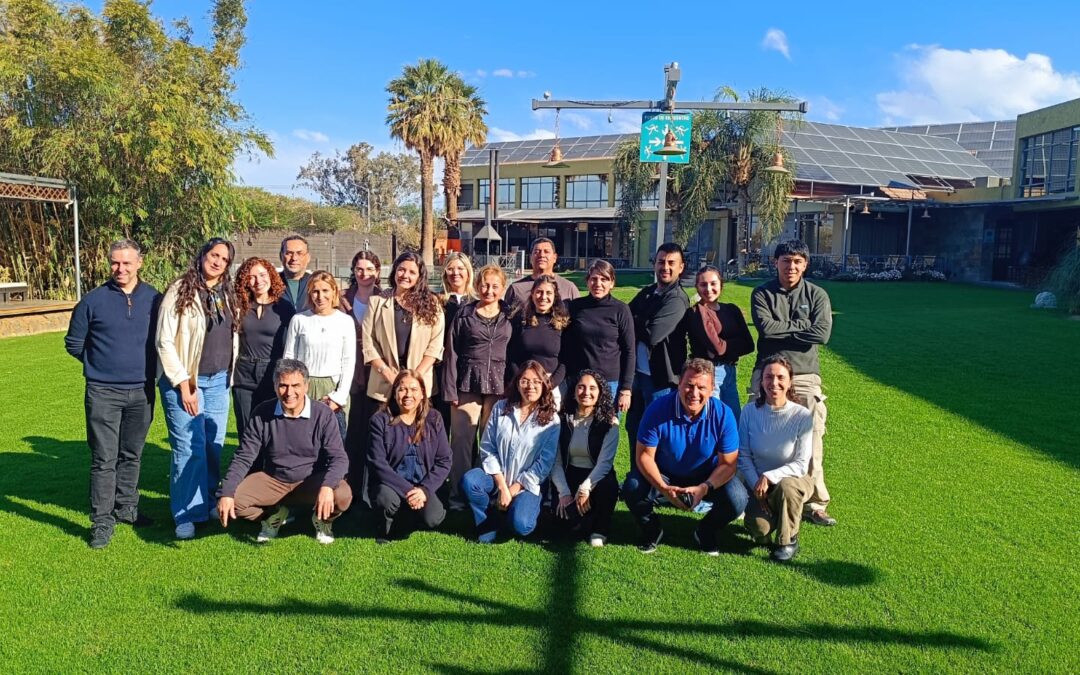
This field data collection makes it possible to develop a map of changes and contribute to a better understanding of the hydrological and vegetation processes taking place in the Maricunga Salt Flat.
Deepening our understanding of the dynamics of this high-Andean system is strategically important because the Maricunga Salt Flat is emerging as a new centre of lithium mining development. In February 2026, the Maricunga lithium project, developed through an alliance between Codelco and Rio Tinto, was granted a CEOL (Special Lithium Operating Contract) to begin its development and environmental permitting process.
Javiera de la Fuente’s work is part of the OASIS Anillo project, which seeks to understand the functioning of the high-Andean salt flats and lagoons of northern Chile. These unique ecosystems are located in basins between 3,700 and 4,300 metres above sea level, where extreme conditions of altitude, aridity and volcanic activity converge.